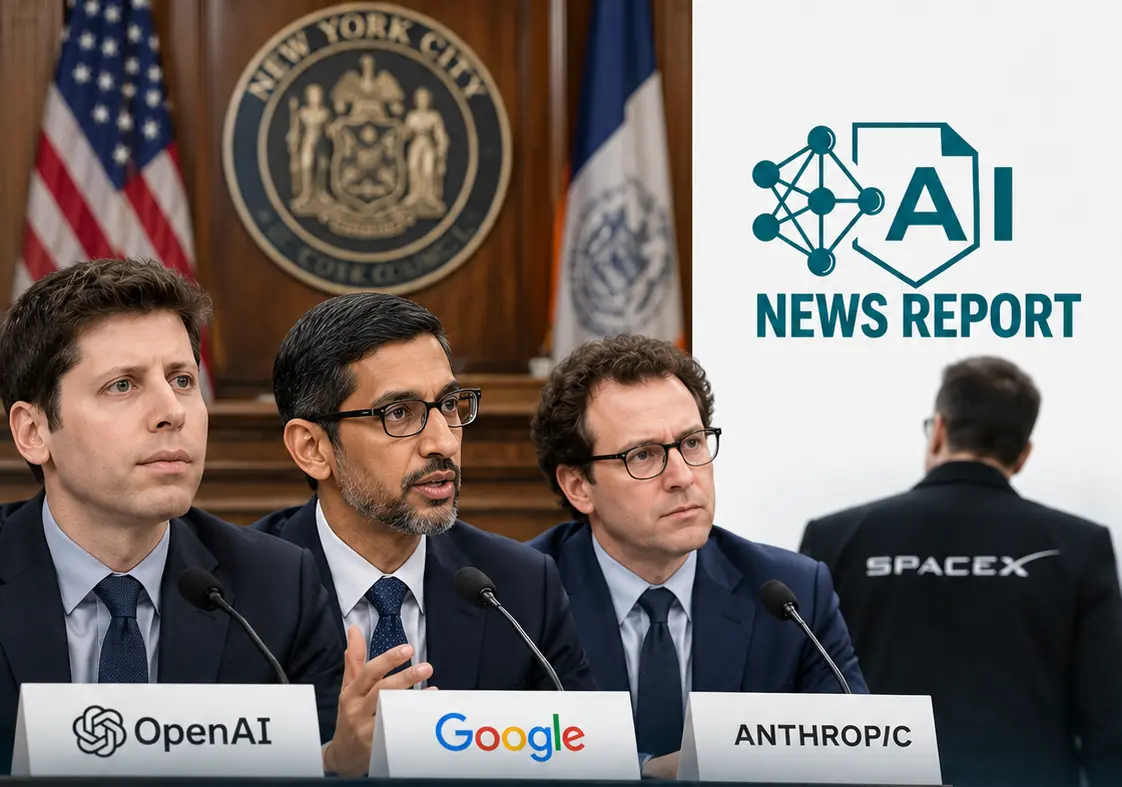
Why the Council Called This Hearing
Council Speaker Julie Menin framed the hearing as a response to what she sees as a gap left by federal inaction. In the announcement preceding the session, she said: "Top experts and executives from AI companies are warning about the serious risks posed by the rapid advancement of artificial intelligence, and it is the government's responsibility to act." She argued the scale of the risk obligates the companies themselves to answer publicly: "Given the stakes, these companies have an obligation to be accountable to the public, appear before the Council to testify, answer our questions, and swear to provide input on the legislative proposals we have put forward." Public Safety Committee chair Oswald Feliz echoed the concern more plainly, saying "one of the biggest concerns is that there has been no guardrails created."
Menin also used the opening of the hearing to directly criticize the federal government's posture on AI, pointing to President Trump's decision to sign a voluntary safety accord with industry leaders the week before. She said the idea that AI companies would simply self-regulate "defies all reason," a sharp rebuttal to the administration's framing of that accord as a meaningful safety measure.
What the Executives Said, and Didn't
Despite the scale of the session, reporting from several outlets suggests company representatives offered few concrete commitments. Coverage from amNewYork specifically notes that AI company representatives "gave few clear answers to key safety questions" throughout the hearing, even as the council pressed them on data privacy safeguards, potential economic disruption and misinformation risks. Menin reportedly expressed frustration with the companies' responses as the session continued.
Google's Alice Friend was among the more substantive voices, calling for a "comprehensive" federal framework to address AI risk and citing national security concerns as part of her reasoning, a notable position for a company representative to take publicly, since it implicitly argues current federal oversight, including the administration's own voluntary accord, falls short.
The Whistleblower Testimony
Alongside the corporate representatives, the council heard testimony from outside experts, most notably Jacob Coxon, a researcher who previously worked at both OpenAI and Anthropic. Coxon testified that AI labs were "gambling with our lives," and separately warned that those developing the technology "don't fully control it." Reporting also notes that Daniel Kokotajlo, another former OpenAI researcher, called on AI companies to increase transparency and slow the pace of leading model development. Their testimony adds to a growing pattern this year of former insiders from major labs speaking publicly about internal concerns once they've left the companies.
The SpaceX No-Show
The most contentious thread of the day was Elon Musk's SpaceX AI unit's absence. The council had subpoenaed the company the previous week after it failed to respond to an initial invitation to testify, and its continued refusal to appear on the day of the hearing drew direct criticism from Menin, who confirmed the council is now planning legal action over what it considers a violation of that subpoena. The other four companies, OpenAI, Anthropic, Google and Meta, had reportedly agreed to send executives only after being warned that subpoenas could follow their own non-compliance, according to Menin's office, suggesting their participation was less than fully voluntary as well.
What Comes Next
The hearing exists to inform legislative proposals already on the table at the council level, covering what redress might exist for New Yorkers if an AI system causes harm, and what safety checks might be required before AI tools can be used in the city. No vote or finalized legislation emerged from the session itself; it was explicitly framed as fact-finding ahead of future council action. The pending legal action against SpaceX AI, however, could become its own significant storyline independent of the broader safety debate, testing how much enforcement power a city council actually has over a company that simply declines to show up.