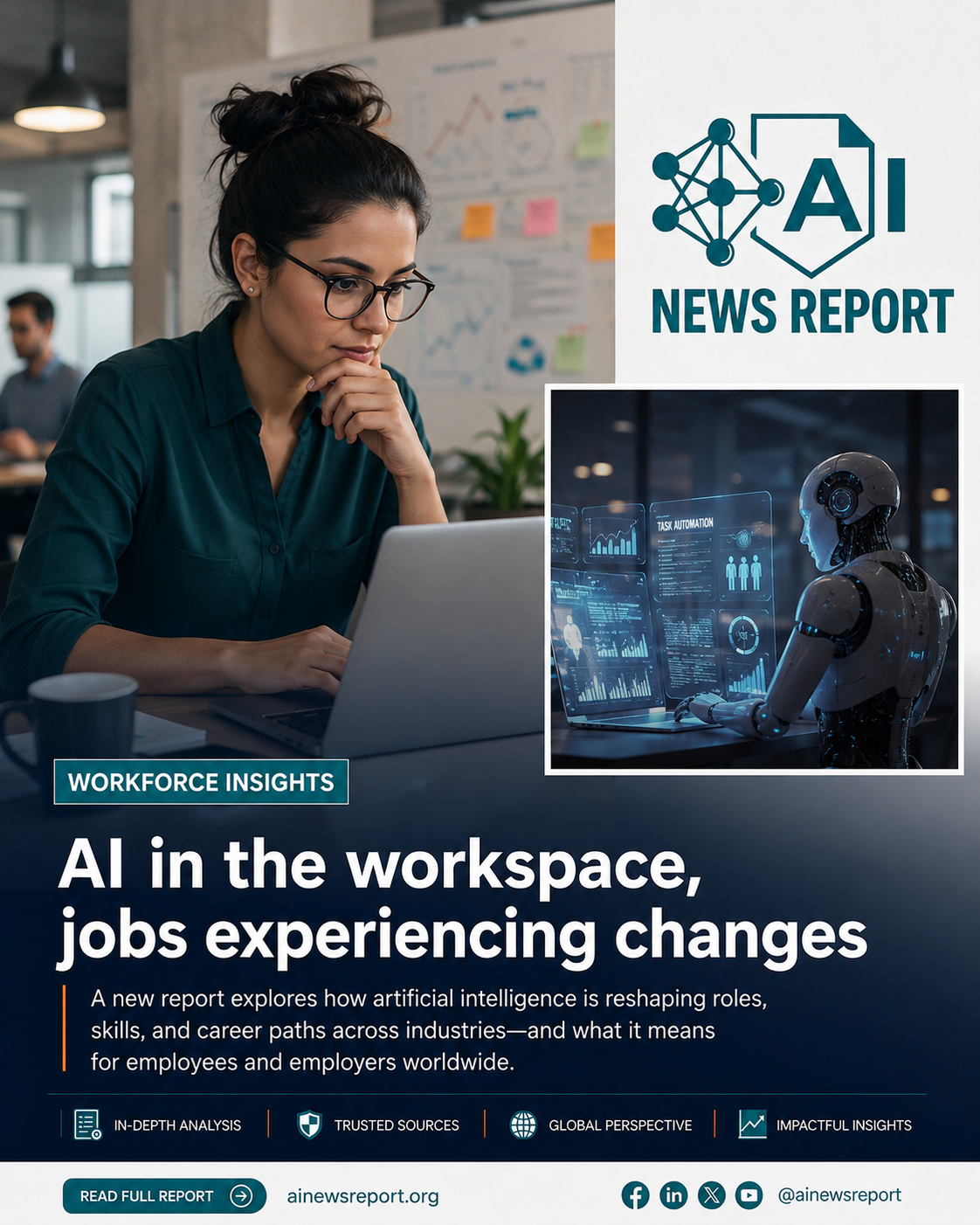
Headlines warned that artificial intelligence would trigger widespread mass unemployment. Today, the reality inside the modern enterprise looks quite different.
AI is actively transforming how work gets done, but instead of wiping out entire job titles overnight, it is unbundling specific tasks within those jobs. Routine, repetitive cognitive duties are being handed off to automated models, while the remaining human responsibilities are being elevated to require higher levels of oversight, judgment, and strategic thinking. Major workforce studies, such as the 2026 PwC Global AI Jobs Barometer and ZipRecruiter's 2026 AI Employer Report, reveal that AI exposure is actually driving headcount growth and raising productivity expectations across organizations.
Understanding which industries and job categories are experiencing the most intense shifts is vital for career planning, talent recruitment, and corporate strategy.
The Two-Track Labor Market: Professionalized vs. Democratized Roles
Recent workforce data reveals a clear divergence in how AI impacts different careers. Jobs impacted by AI generally fall into two broad categories:
Professionalized Jobs: These are high-cognitive-exposure roles—such as specialized financial analysts, software developers, and marketing managers—where AI absorbs routine drafting and data entry. Workers in these roles leverage AI assistants to multiply their output, leading to higher wage growth and elevated demand for human leadership.
Democratized Jobs: These are roles where AI lowers the barrier to entry for complex tasks. Tools that instantly generate graphics, write code snippets, or compose customer replies allow generalists to perform tasks that once required specialized technical training.
Key Job Categories Experiencing Major Shifts
1. Customer Support and Operations Tier-1 help desks and customer support operations have experienced some of the highest automation exposure. Conversational AI agents now resolve the majority of routine inquiries, from processing order returns to updating account settings. As a result, human support agents are transitioning into "escalation specialists" who step in primarily to resolve emotionally complex or highly technical customer disputes.
2. Software Development and IT Operations Basic coding, syntax formatting, and initial debugging are increasingly handled by AI coding agents. While entry-level coding tasks are shifting to software, the demand for software engineers remains strong though the skill set has evolved. Developers are now expected to act as system architects and code auditors who oversee AI-generated pull requests, manage cloud infrastructure, and enforce system security.
3. Data Entry, Finance, and Administration Back-office functions like invoice processing, basic bookkeeping, and meeting scheduling are seeing rapid automation. Rather than manually entering data into spreadsheets, administrative personnel are moving into workflow optimization roles, managing automated software tools, and ensuring data quality across cloud environments.
4. Marketing, Copywriting, and Content Strategy Generative tools can produce initial ad copy, social media captions, and email drafts in seconds. This shift has reduced the demand for pure content volume creation while increasing the value of content strategists who understand audience psychology, brand positioning, and editorial oversight.
The New Challenge for Entry-Level Workers
One of the most significant shifts occurring in the workforce is the compression of the traditional career ladder.
Historically, entry-level workers built foundational domain knowledge by performing basic tasks—such as summarizing research papers, cleaning data, or drafting routine memos. With AI now handling nearly 40% of these basic entry-level tasks, employers are raising baseline hiring requirements. Junior employees are expected to demonstrate critical judgment, self-sufficiency, and project leadership much earlier in their tenure.
How to Stay Competitive in an AI-Driven Workplace
Adapting to an automated workplace requires a balanced approach to skill building:
Develop AI Fluency: Learn how to effectively prompt, audit, and integrate AI productivity tools directly into your daily workflow.
Double Down on Human Skills: Capabilities that models struggle to replicate—such as complex negotiations, ethical reasoning, cross-team empathy, and creative problem solving—are becoming significantly more valuable.
Shift from Execution to Curation: Focus on becoming a skilled editor and validator of AI outputs rather than relying solely on manual execution.
By embracing these technological tools while cultivating distinct human strengths, workers can position themselves at the forefront of the evolving labor market.