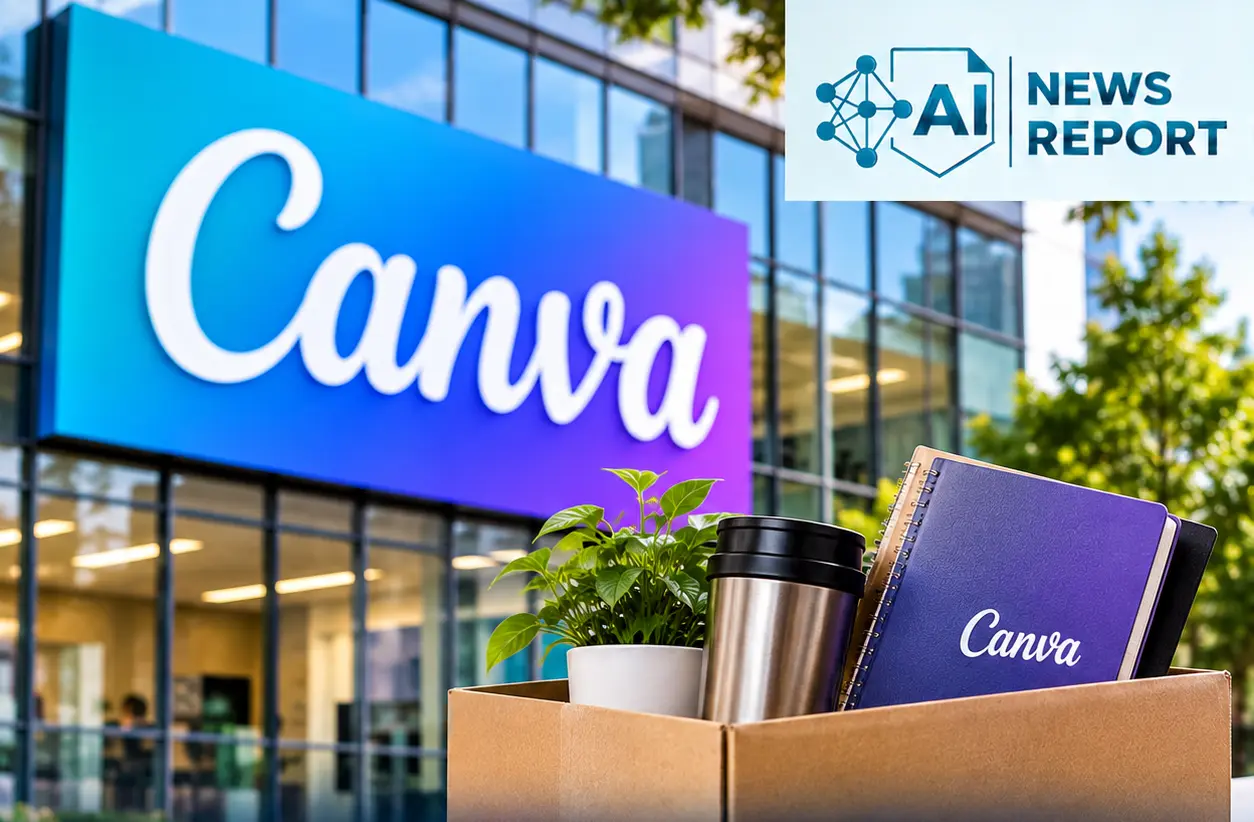
A First for Canva
Canva has told staff it will cut, change or relocate 1,271 roles, about 22% of its workforce, in the first mass layoff in the company’s 13-year history. Co-founder and CEO Melanie Perkins announced the restructuring in a memo to employees, reported on November 3 and 4. The figure covers three outcomes: some employees will lose their jobs, some will change roles, and some will be asked to relocate to centralized hubs. Canva employs more than 5,000 people.
Growth Slows for the First Time in a Decade
Perkins described the decision as “without doubt the hardest moment in our thirteen-year history.” She told staff that growth slowed over the past year for the first time in a decade, and that after exploring alternatives she concluded small changes would not be enough. Forbes Australia reports that investors have marked down the company’s valuation as revenue growth slows. HR Brew, citing an industry newsletter, says Canva missed its second-quarter 2026 guidance.
Refounding Around Smaller Teams
The plan is to “re-found” Canva by returning to small, empowered teams. Canva is merging its product, growth and platform teams to reduce communication friction. It is also cutting “subspecialisation”, which means employees may be asked to take on broader responsibilities. The company is moving to hybrid work, with staff in the office several days a week. People Matters describes this as a change from Canva’s earlier remote-first approach.
A Severance Package Drawing Praise
The handling of departures has drawn the most attention. Everyone affected will receive at least six months’ salary, including statutory entitlements, regardless of location. They also get 12 months of healthcare coverage in countries where Canva already provides it. Departing staff keep their company MacBooks, and the one-year vesting cliff is removed for anyone who joined in the past year.
Career support includes one-on-one coaching, interview preparation, a one-year LinkedIn Premium subscription and an opt-in alumni talent directory shared with investors, partners and the wider industry. Canva is also launching the Canva Collective Fund, which will give grants of up to US$10,000 to employees who want to start a venture.
Praise From HR Leaders and Executives
HR Brew notes that six months is relatively generous compared with other recent tech severance packages. Inc says a package of that length signals Canva wants to protect its reputation with those who leave as well as those who stay. Fortune reports that Perkins has drawn praise across LinkedIn for the candour of her note, and Entrepreneur quotes one CEO calling the announcement “a master class.”
Where AI Fits, and Where It Doesn’t
AI is context here, not Canva’s stated reason. As reported, Perkins’s memo does not name AI as the cause, a point both Inc and People Matters make. She did allude to new technology transforming what people create and what they expect from products, per HR Brew.
People Matters notes the cuts come amid growing competition from AI-powered image-generation and design tools. HR Brew, citing the SaaS CFO newsletter, reports that Perkins told shareholders the company was relying too heavily on third-party frontier models rather than launching its own AI products. Fortune frames the episode as Canva’s “AI reckoning”, which is the publication’s interpretation rather than the company’s.
Canva’s restructuring lands as AI is increasingly cited in workforce reductions. Challenger, Gray & Christmas found AI was cited in more than 120,000 dismissals in the first nine months of 2026, about 21% of all layoffs, according to Fast Company. Canva’s case differs because it has not tied the cuts to AI. Its significance is that a leading design platform is restructuring in a market reshaped by AI tools, and that it chose to publicly set out how it would treat the people affected.