A Chair, a Microphone, and a Message
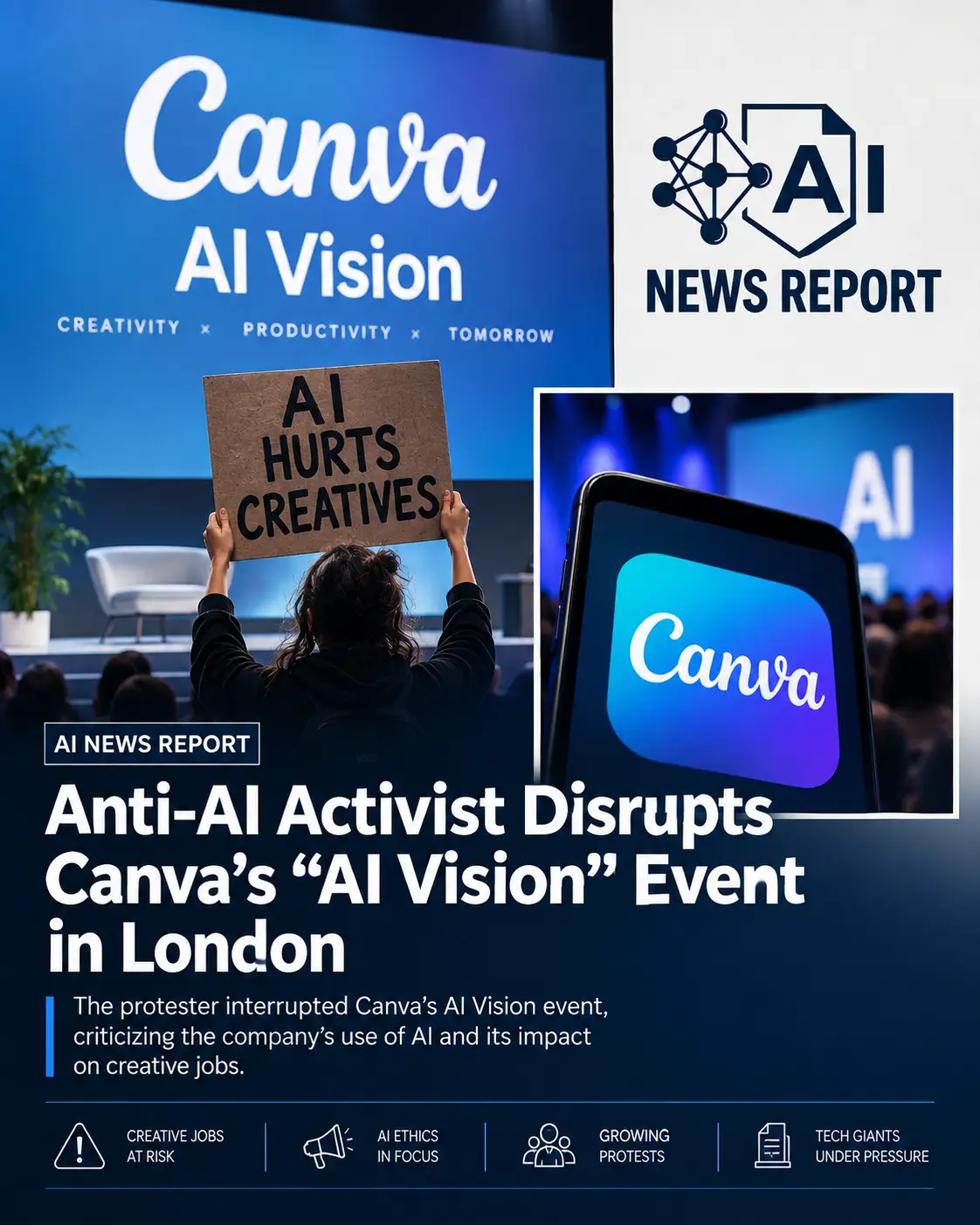
It took less than a minute to bring Canva's "AI Vision" conference to a standstill. Mid-keynote, a young activist rose from her seat, climbed onto it, and began addressing the speakers and audience directly. Rather than shouting slogans, she delivered a pointed argument: that the communities living closest to AI data centres are the ones absorbing the environmental and resource costs of the technology's growth, while having no meaningful say in how — or whether — that growth is regulated.
Security intervened within moments and escorted her from the venue. It was a familiar sequence for anyone who has followed AI protest activity this year. What wasn't familiar was the room's reaction.
The Silence Heard Round TikTok
Footage of the disruption spread quickly after it was posted to TikTok, and much of the online conversation centered less on what the activist said and more on how the room responded to it. Rather than jeering, applauding, or attempting to talk over her, the audience reportedly sat in near-total silence for the full length of her speech — a detail that struck many viewers as more telling than the protest itself. Some read it as discomfort; others as tacit agreement with concerns the industry rarely addresses on its own stages.
Part of a Bigger Pattern
This is not an isolated flashpoint. London has emerged as one of the most active cities globally for grassroots anti-AI organizing in 2026. In February, more than 300 people marched from OpenAI's London office through King's Cross to the doorsteps of Google and Meta, in what was described at the time as the largest AI-focused protest yet, organized by PauseAI UK and Pull the Plug. Their demands ranged from a pause on frontier AI development to broader accountability for AI-generated harms, from disinformation to job loss.
Months earlier, a former AI safety researcher held an eight-day hunger strike outside Google DeepMind's London offices, calling on CEO Demis Hassabis to commit to halting frontier model development if rival labs did the same. A separate activist travelled from Amsterdam to join that same protest and continued the hunger strike for 16 days.
Why It Matters for the Industry
Taken individually, disruptions like the one at Canva's event can look like isolated PR headaches for the companies involved. Taken together with the marches, hunger strikes, and now viral confrontations happening at industry showcases, they point to a steadily growing public constituency that feels shut out of decisions about how AI is built and deployed — even as boardrooms, royals, and world leaders hold their own closed-door conversations about AI safety. For companies hosting high-profile "vision" events meant to showcase AI's promise, the activist's message — and the audience's silence — is a reminder that the public conversation happening outside the auditorium doesn't always match the one happening on stage.