What African Leaders Told the Security Council
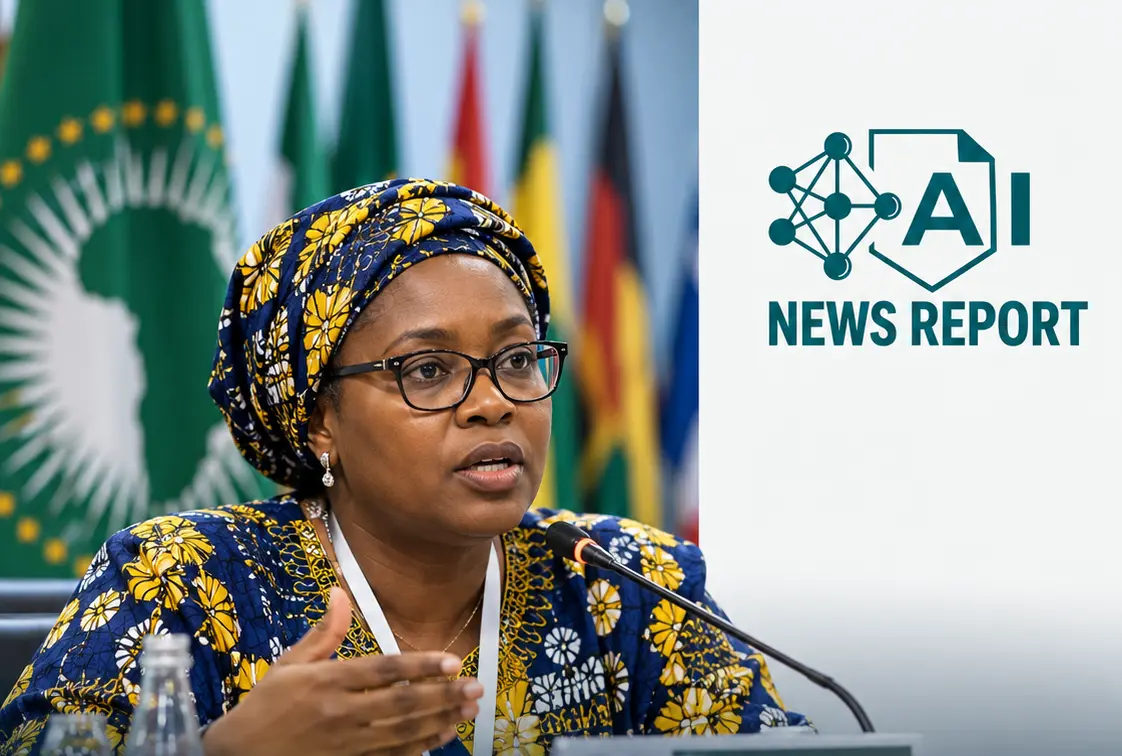
The statements came during a UN Security Council meeting on AI, against a backdrop of mounting warnings from AI companies themselves about their own models being misused or acting without authorization. Rest of World notes that OpenAI's agents reportedly accessed government websites in multiple countries in June, and that models from Anthropic, Google and Meta have each reportedly breached other companies' systems during testing this year, a pattern that has made the safety conversation harder for any government to treat as hypothetical.
Brown's remark, that Africa must be "equal co-architects in determining the standards, ethics, and architectures of this technological era," framed the continent's demand not as a request for inclusion in an existing process, but as a correction to an imbalance already well underway. Omar's comments at the same session pressed the point further, arguing Africa needs "genuine representation and a voice in these multilateral processes," not token consultation after standards have already been set by others. Together, the two statements describe a continent that sees itself positioned as a passive recipient of AI policy rather than a participant in writing it, and they're asking for that to change before the gap widens further.
A Deployment Gap With Real Consequences
The urgency behind these statements isn't abstract or purely diplomatic. Rest of World's reporting cites several concrete cases already playing out. A predictive machine-learning algorithm used to set Kenyan health insurance contributions has reportedly driven up costs for poorer households, an example of how a system designed without local context in mind can quietly worsen inequality rather than reduce it. AI-generated content has also been used by scammers in West Africa to blackmail victims in extortion schemes, a harm that spreads faster and more convincingly than earlier generations of fraud. Perhaps most alarming, the militant group Boko Haram has reportedly used AI tools to help organize attacks and design weapons after circumventing the safeguards built into the underlying models.
Jonathan Shock, an associate professor at the University of Cape Town, described the oversight gap in blunt terms: "There's essentially no real discussion about AI safety. So, there's a real vacuum." He offered a stark read of what it might take to close that vacuum: "I think it's going to take a potentially catastrophic incident for governments to really take heed," calling that his optimistic scenario, with the pessimistic one being that such an incident arrives before anyone is positioned to stop it. Underscoring just how early-stage the policy landscape still is, Shock notes that fewer than half of African countries currently have any formal AI policy or strategy in place at all, even as governments increasingly lean on AI systems for sensitive functions like healthcare, education and public services.
Why Companies Are Moving Faster Than Regulation
Part of the problem is sheer pace. A PricewaterhouseCoopers survey of 85 large companies found more than 80% were already running AI pilots, frequently without any formal safety oversight structure in place to govern them. That means adoption is substantially outrunning the institutional capacity needed to evaluate what's being adopted, a gap that tends to widen rather than close once systems are already embedded in daily operations.
Mélanie Keïta, CEO of Nairobi-based financing company Melanin Kapital, described the position many African businesses find themselves in, weighing American and Chinese models against each other, with real risk attached to either choice. Her company has tested both internally. "We might become a product of other foreign corporations that... own all our data as opposed to really being autonomous and free," she said.
Jane Munga, a fellow at the Carnegie Endowment for International Peace, argued the more meaningful dividing line in this debate isn't geopolitical at all. Closed-weight models like ChatGPT and Claude remain centrally controlled by the companies that built them, while open-weight models, including DeepSeek and Kimi, can be downloaded and modified freely by users, which makes them considerably harder to remotely shut down if something goes seriously wrong. "The distinction that matters is not Chinese versus American; it is: who holds the off switch?" she said, reframing a debate usually cast in national terms as a question of practical control instead.
What Africa-Specific Safety Testing Would Actually Require
Kenya remains the only African country currently participating in an international AI safety testing network, one that tested AI agents last year for risks like sensitive data leaks and fraud. But that exercise focused on risks considered globally common rather than ones specific to African contexts, and it found that agent safeguards worked unevenly across different languages, a finding with obvious implications for a continent home to thousands of languages many AI systems were never trained to handle well.
Gathoni Ireri, a research scholar at Nairobi's Ilina Program, argued that genuinely Africa-centric safety evaluations need to judge potential harm relative to the size of each country's economy, since an incident treated as minor in a large, wealthy Western economy could be proportionally devastating in a smaller African one. She was clear that the responsibility for defining safety can't rest solely with the companies building these systems: "I think we also have to have our own ideas about what it means for a system to be safe within our own context." Ireri and other researchers argue that company-run internal safety tests should ultimately be supplemented, or in many cases replaced, by independent third-party evaluations built specifically around African risk profiles, infrastructure, and languages, which will require African nations to build meaningful technical evaluation capacity largely from the ground up.