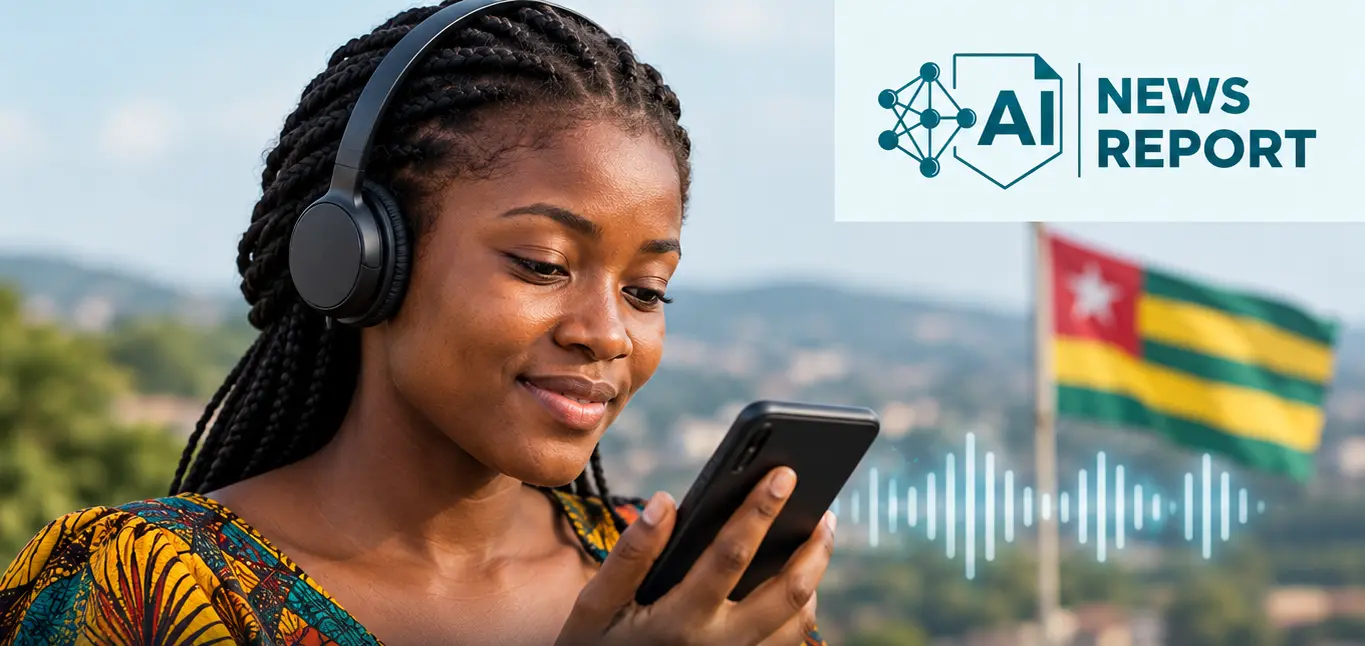

Orange has released five open-weight large language models that incorporate Wolof, one of West Africa's most widely spoken languages, and made them freely available on Hugging Face. The release was announced as part of Orange OpenTech 2026 and is aimed at pushing AI beyond the handful of languages it currently handles well.
What Orange released
The five models were developed and fine-tuned by Orange's in-house AI teams and come in five different sizes, so developers can match a model to the hardware and use case they have in mind. They are free to use for non-commercial purposes, which covers research, public services and many education and health projects.
Orange says the aim is to give local developers, researchers and public authorities the tools to build digital services, such as conversational assistants, that can understand and generate written Wolof.
How the models were trained
According to the reporting, the accompanying training dataset is built from publicly available datasets that were automatically translated into Wolof. Orange says it contains no Orange corporate data.
That approach is practical when written Wolof text is scarce, but machine-translated data can carry translation errors and may not capture how people actually speak and write. How well the models handle everyday Wolof, including code-switching with French, is something developers and researchers will now be able to test for themselves.
Part of a wider African-language push
The Wolof models belong to Orange's broader effort to bring African languages into AI, which also covers Lingala, Swahili, Darija, Mooré and Dioula. Orange also plans to join a global coalition of more than 60 organisations working to increase linguistic diversity in AI, contributing its expertise and local knowledge across its 18 markets in the Middle East and Africa.
The release follows a 2024 announcement in which Orange said it was working with OpenAI and Meta to build models for regional African languages, starting with Wolof and Pulaar. The sources reviewed for this article do not say which base models the new Wolof releases were built on.
Why it matters
Wolof is spoken in Senegal, The Gambia and southern Mauritania by roughly 16 million people, according to figures reported when Orange first announced the project. Most mainstream AI assistants handle it poorly or not at all, which leaves many speakers relying on French or English to use digital services.
Open weights lower the barrier for local startups, universities and government teams, since they can adapt the models without negotiating access or paying licence fees for non-commercial work. The non-commercial limit does mean businesses wanting to build paid products will need to look at Orange's terms.
The models are text-only, so they do not yet address spoken Wolof. Expect the real test to be what developers build with them over the coming months.