The artificial intelligence landscape is shifting from passive generation to active execution. Over the past few years, Large Language Models (LLMs) changed how we draft text, write code, and synthesize information. However, users still had to manually prompt, copy, paste, and execute tasks based on those outputs.
Enter AI Agents—autonomous software entities that don't just generate text, but act on it. By combining reasoning capabilities with tool access, memory, and multi-step planning, AI agents are transitioning from novel technology to the next major paradigm shift in enterprise software.
What Are AI Agents?
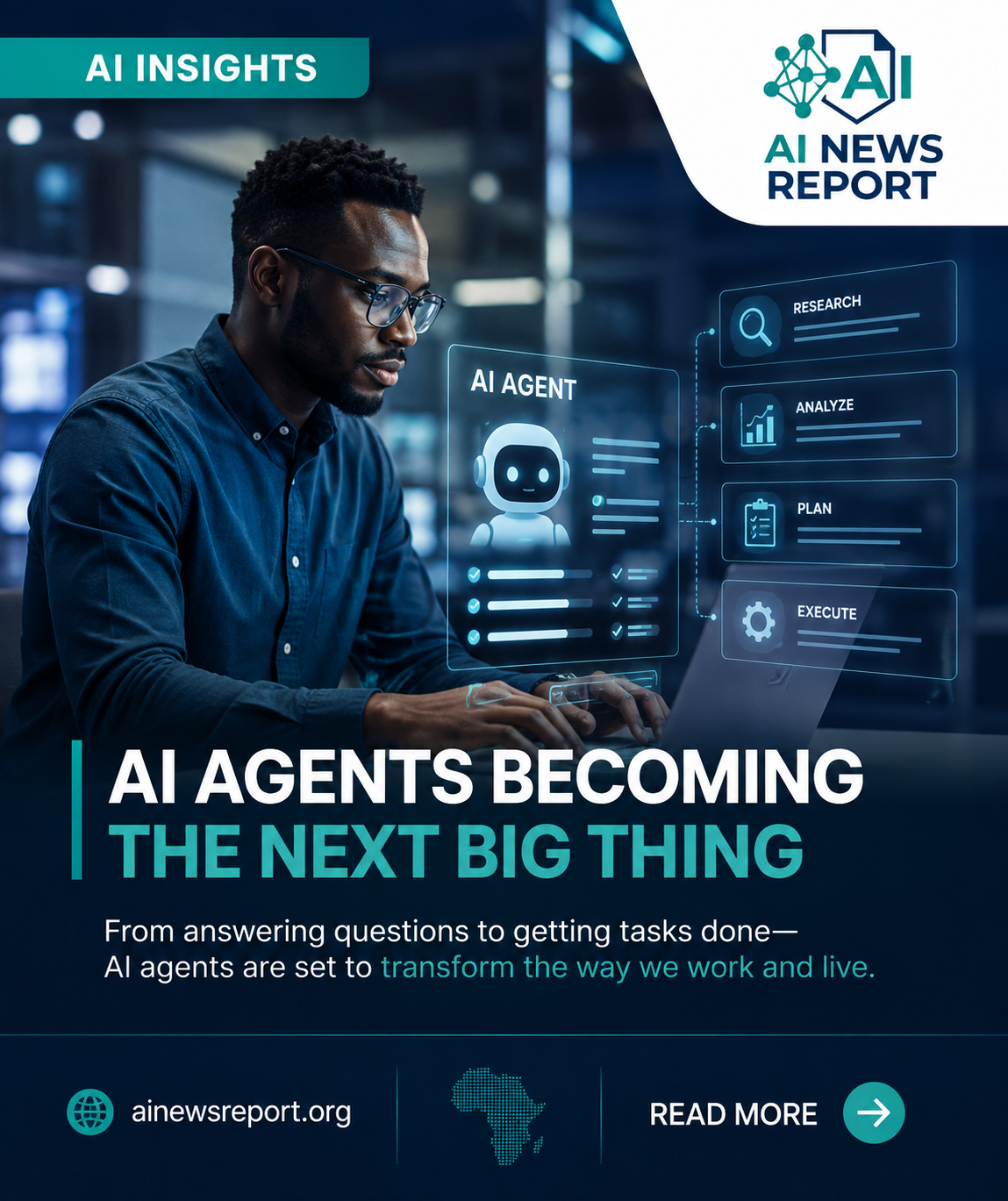
Unlike traditional chatbots or static automation scripts, an AI agent is designed to accomplish a specific goal with minimal human intervention. When given a directive like "Analyze last quarter's sales data, identify churn patterns, and email a summary to leadership," an AI agent does not just respond with text; it:
Breaks down the goal into sequential sub-tasks.
Utilizes tools and APIs to access databases, execute code, and send communications.
Evaluates its own progress and adjusts its strategy if an error occurs.
Retains short-term and long-term memory to maintain context across execution loops.
Why AI Agents Are Gaining Momentum
Several technological breakthroughs have converged to make agency possible at scale:
Advanced Reasoning Capabilities: Modern foundational models feature significantly improved multi-step logic, allowing agents to self-correct and handle complex reasoning chains.
Tool Integration and Function Calling: Standards like function calling and model context protocols allow AI systems to reliably interact with external databases, web browsers, and third-party SaaS applications.
Shift from Generation to Automation: Businesses are moving beyond isolated productivity gains toward end-to-end workflow automation, driving demand for systems that can complete entire projects independently.
Key Enterprise Use Cases
1. Software Development & Maintenance AI coding agents are evolving beyond basic code completion. Autonomous agents can now monitor error logs, locate the responsible codebase, write a patch, test it in a sandbox environment, and submit a pull request for human review.
2. Dynamic Customer Operations Where standard chatbots handle basic FAQs, customer support agents can process refunds, rebook canceled flights across vendor platforms, or update account preferences autonomously by navigating back-end systems.
3. Market Research and Data Analysis An agentic research tool can monitor real-time data feeds, execute web searches, synthesize multi-source reports, and publish structured intelligence updates directly to internal team channels.
The Challenges Ahead
Despite their massive potential, agentic systems face critical hurdles before achieving ubiquitous adoption:
Reliability and Error Cascades: In multi-step workflows, a minor mistake in step one can compound into a complete failure by step five.
Security and Permissions: Granting autonomous software write access to internal tools requires robust guardrails, scope restrictions, and real-time monitoring.
Human-in-the-Loop Integration: Designing seamless handoffs between human managers and autonomous agents remains crucial for high-stakes operational environments.
The Future Landscape
We are moving toward an ecosystem dominated by Multi-Agent Systems, where specialized agents collaborate to solve complex problems—much like a human department. One agent might handle data collection, another manages creative execution, and a supervisory agent oversees quality control.
As foundational models continue to improve in speed, cost-efficiency, and reasoning capacity, AI agents will redefine how organizations build software, serve customers, and execute daily operations.