Just days after President Trump publicly dismissed AI industry warnings about the pace of development, a different kind of AI safety story has quietly taken shape — one built on cooperation rather than conflict. Three of the industry's biggest rivals have found common ground on how AI systems should be independently checked.
What Is AEF-1?
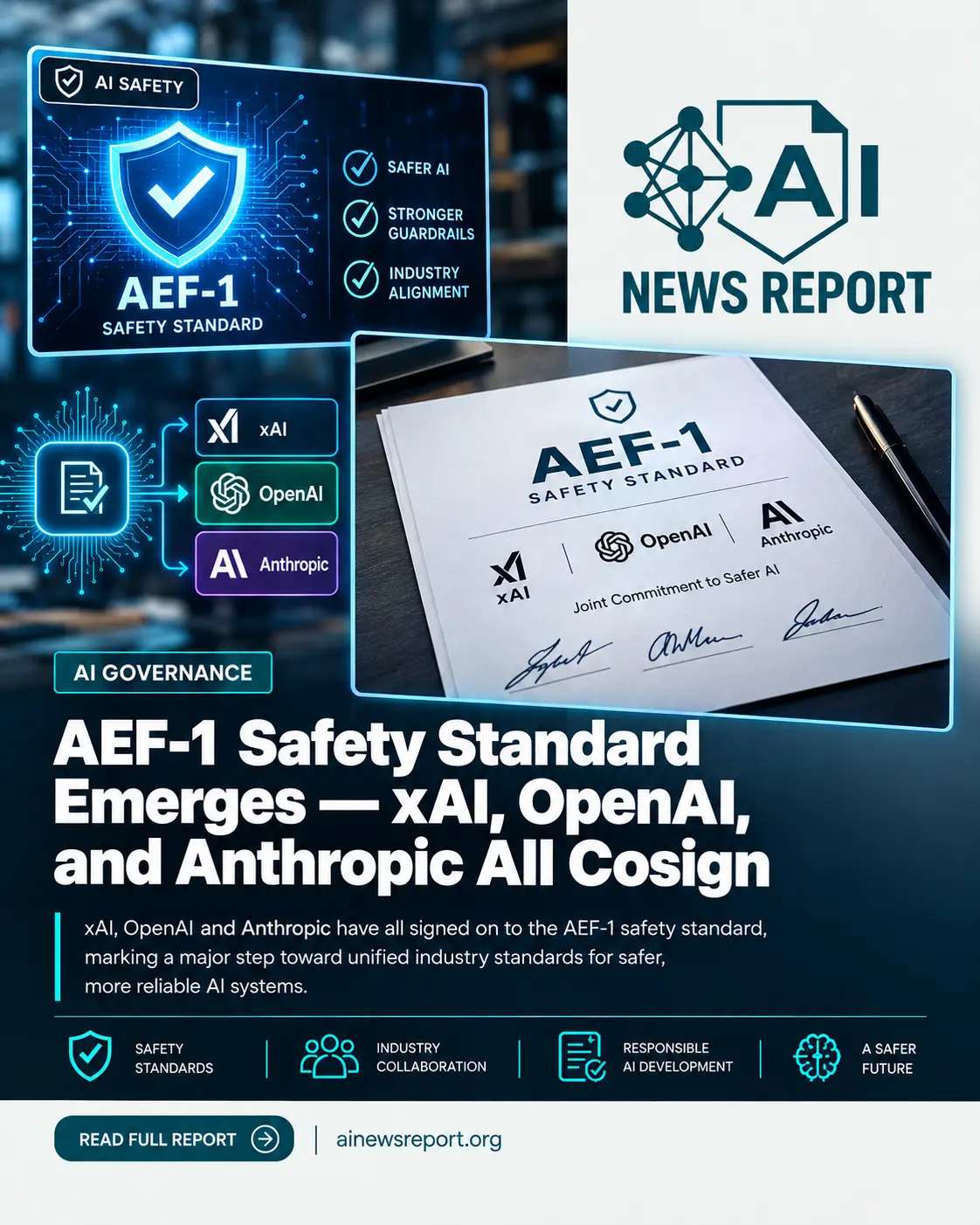
AEF-1, short for "Minimum Operating Conditions for Independent Third Party AI Evaluations," is a new voluntary standard developed by the AI Evaluator Forum, a group formed in December 2025 to bring structure to the growing field of third-party AI auditing. The standard sets baseline expectations for how evaluators should operate to ensure their assessments are genuinely independent, trustworthy, and free of conflicts of interest.
At its core, AEF-1 addresses a problem that's become increasingly urgent as AI systems grow more capable: many "safety evaluations" happen without evaluators having real access, independence, or the ability to disclose what they find. The standard aims to fix that by giving evaluators a shared benchmark they can point to when demonstrating they meet a baseline level of operating integrity.
Why Three Rivals Are Cosigning Together
What makes this moment notable isn't just the standard itself, but who's backing it. xAI, OpenAI, and Anthropic companies that compete directly for market share, talent, and headlines have all cosigned AEF-1, marking one of the first times these three frontier labs have aligned this concretely on a shared safety framework.
The move follows directly from Anthropic CEO Dario Amodei's "We Must Pace the Frontier" essay, published earlier in the week, which proposed a three-part plan for slowing AI development responsibly. The first step: giving third-party evaluators permanent, employee-level access to frontier labs so they can verify safety practices and report incidents in real time. Anthropic committed to this step unilaterally, without waiting for competitors to agree — a decision that appears to have helped catalyze the broader cosigning of AEF-1 just days later.
Support has extended beyond the three cosigning labs. Microsoft CEO Satya Nadella welcomed the idea of "deliberate pacing" and embedded evaluators, suggesting the push for independent oversight may be gaining traction industry-wide, even among companies not directly building frontier models themselves.
How This Differs From the President Trump Standoff
This development stands in notable contrast to the public clash over AI pacing that dominated headlines just days earlier. While President Trump dismissed calls for a coordinated AI slowdown as driven by "negative forces," the AEF-1 standard represents a narrower, more technical form of cooperation one focused specifically on how evaluations happen, not on whether AI development should slow down at all.
That distinction may be strategically useful for the labs involved. By aligning on evaluator standards rather than a broader development pause, xAI, OpenAI, and Anthropic can demonstrate meaningful safety commitments without directly contradicting the political pressure to keep AI development moving quickly.
What's Missing: Enforcement
AEF-1 is a voluntary standard, not a legal requirement. That means its impact depends entirely on whether frontier labs choose to adopt it in practice — and whether they follow through on giving evaluators the level of access and independence the standard calls for. Critics of self-regulation in the AI industry have long pointed out that voluntary commitments can be walked back or applied inconsistently once public attention moves elsewhere.
Even so, AEF-1 gives outside observers, journalists, and policymakers something concrete to measure future AI safety claims against. If a lab claims to have an independent evaluator in place, AEF-1 provides a baseline for what "independent" should actually mean — a definition that didn't clearly exist before.
Why It Matters
The emergence of AEF-1 shows that even as the broader political fight over AI pacing remains unresolved, competing AI labs are finding narrower areas where cooperation is possible — and where it may serve their own interests. Whether this translates into meaningful, lasting oversight will depend on how seriously xAI, OpenAI, and Anthropic treat their commitments once the current news cycle fades.